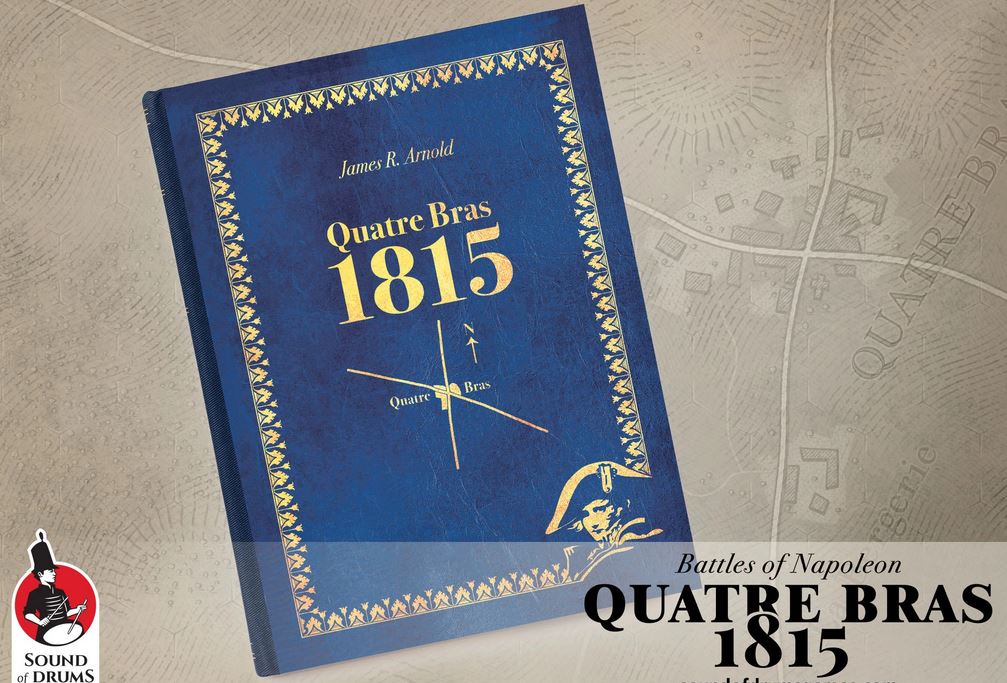
The Battle of Quatre Bras (James R. Arnold) (Import) *PRE-ORDER*
ETA Q3 2025
This is volume 1 of the book series "Sound of History" published by SoD. Written by the well known historian James R. Arnold about the battle of Quatre Bras 1815.
The Battle of Quatre Bras, fought on June 16, 1815, was a crucial prelude to the Battle of Waterloo. Situated at a strategic crossroads in present-day Belgium, the engagement pitted Duke of Wellington's Anglo-allied forces against Marshal Michel Ney's left wing of Napoleon's Armée du Nord.
The battle should not only be seen as a prelude to the subsequent days’ fighting at Waterloo, but as a significant battle in its own right, where the outcome had decisive significance for Napoleon’s fate.
Napoleon's strategy aimed to prevent the unification of the Anglo-allied and Prussian armies by swiftly defeating each other separately. While Napoleon engaged the Prussians at Ligny, he directed Ney to seize Quatre Bras to block Wellington's potential support to the Prussians.
Initially, Ney's forces outnumbered the defenders at Quatre Bras. However, throughout the day, Allied reinforcements arrived, balancing the scales. Intense combat ensued, with control of key positions like the Bossu Wood and Gemioncourt Farm shifting multiple times.
Despite Ney's aggressive tactics, he couldn't secure Quatre Bras before nightfall. This delay prevented him from assisting Napoleon at Ligny, where the Prussians managed a strategic withdrawal. Consequently, the Prussian army remained a viable force, later playing a pivotal role at Waterloo.
Casualties were significant on both sides, with the Allies suffering approximately 4,700 losses and the French around 4,300. The battle underscored the importance of timely maneuvers and coordination, factors that would heavily influence the outcome at Waterloo two days later.
Original: $17.21
-65%$17.21
$6.02The Battle of Quatre Bras (James R. Arnold) (Import) *PRE-ORDER*
ETA Q3 2025
This is volume 1 of the book series "Sound of History" published by SoD. Written by the well known historian James R. Arnold about the battle of Quatre Bras 1815.
The Battle of Quatre Bras, fought on June 16, 1815, was a crucial prelude to the Battle of Waterloo. Situated at a strategic crossroads in present-day Belgium, the engagement pitted Duke of Wellington's Anglo-allied forces against Marshal Michel Ney's left wing of Napoleon's Armée du Nord.
The battle should not only be seen as a prelude to the subsequent days’ fighting at Waterloo, but as a significant battle in its own right, where the outcome had decisive significance for Napoleon’s fate.
Napoleon's strategy aimed to prevent the unification of the Anglo-allied and Prussian armies by swiftly defeating each other separately. While Napoleon engaged the Prussians at Ligny, he directed Ney to seize Quatre Bras to block Wellington's potential support to the Prussians.
Initially, Ney's forces outnumbered the defenders at Quatre Bras. However, throughout the day, Allied reinforcements arrived, balancing the scales. Intense combat ensued, with control of key positions like the Bossu Wood and Gemioncourt Farm shifting multiple times.
Despite Ney's aggressive tactics, he couldn't secure Quatre Bras before nightfall. This delay prevented him from assisting Napoleon at Ligny, where the Prussians managed a strategic withdrawal. Consequently, the Prussian army remained a viable force, later playing a pivotal role at Waterloo.
Casualties were significant on both sides, with the Allies suffering approximately 4,700 losses and the French around 4,300. The battle underscored the importance of timely maneuvers and coordination, factors that would heavily influence the outcome at Waterloo two days later.
Product Information
Product Information
Shipping & Returns
Shipping & Returns
Description
ETA Q3 2025
This is volume 1 of the book series "Sound of History" published by SoD. Written by the well known historian James R. Arnold about the battle of Quatre Bras 1815.
The Battle of Quatre Bras, fought on June 16, 1815, was a crucial prelude to the Battle of Waterloo. Situated at a strategic crossroads in present-day Belgium, the engagement pitted Duke of Wellington's Anglo-allied forces against Marshal Michel Ney's left wing of Napoleon's Armée du Nord.
The battle should not only be seen as a prelude to the subsequent days’ fighting at Waterloo, but as a significant battle in its own right, where the outcome had decisive significance for Napoleon’s fate.
Napoleon's strategy aimed to prevent the unification of the Anglo-allied and Prussian armies by swiftly defeating each other separately. While Napoleon engaged the Prussians at Ligny, he directed Ney to seize Quatre Bras to block Wellington's potential support to the Prussians.
Initially, Ney's forces outnumbered the defenders at Quatre Bras. However, throughout the day, Allied reinforcements arrived, balancing the scales. Intense combat ensued, with control of key positions like the Bossu Wood and Gemioncourt Farm shifting multiple times.
Despite Ney's aggressive tactics, he couldn't secure Quatre Bras before nightfall. This delay prevented him from assisting Napoleon at Ligny, where the Prussians managed a strategic withdrawal. Consequently, the Prussian army remained a viable force, later playing a pivotal role at Waterloo.
Casualties were significant on both sides, with the Allies suffering approximately 4,700 losses and the French around 4,300. The battle underscored the importance of timely maneuvers and coordination, factors that would heavily influence the outcome at Waterloo two days later.